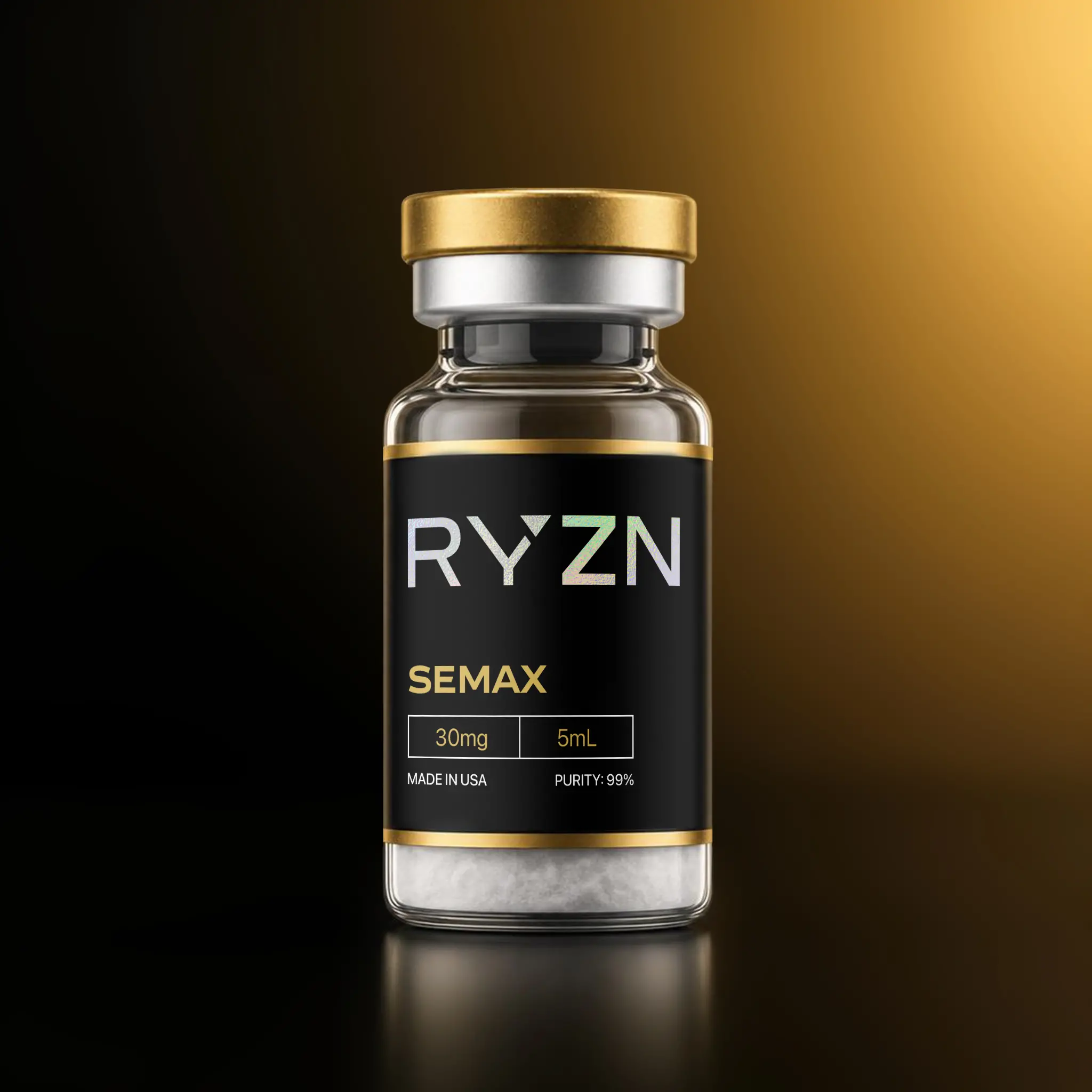
Semax 30mg
Semax is a synthetic heptapeptide derived from the ACTH(4-10) amino acid sequence and designed without the hormonal activity associated with full-length ACTH. It has been studied for its potential effects on neurotrophic signaling, cognitive function, attention, memory, and neurological resilience.
Research on Semax has focused on its interaction with pathways involved in neuronal signaling and brain function, making it a compound of interest in cognitive and neurological research.
Wholesale access
Apply for Wholesale AccessPricing is quoted per order under our at-will wholesale model — based on the products and volumes you need. Apply for partner access to request a quote.
Semax is a synthetic heptapeptide derived from the ACTH(4-10) amino acid sequence. It was developed to retain certain neurological properties associated with this peptide fragment without the hormonal activity of full-length adrenocorticotropic hormone (ACTH).
Semax has been studied extensively for its potential influence on neurotrophic signaling, cognitive function, attention, memory, and neurological resilience.
How Semax Works
Semax has been investigated for its effects on signaling pathways involved in neuronal function, neuroplasticity, and the brain’s response to physiological stress.
Research suggests that Semax may influence neurotrophic signaling pathways associated with the growth, maintenance, and adaptability of neurons. These mechanisms have made it an important research compound in studies involving cognition and neurological function.
Unlike full-length ACTH, Semax was specifically designed without significant corticosteroid-stimulating hormonal activity.
Neurotrophic Signaling Research
One of the primary areas of Semax research involves neurotrophic factors and neuronal signaling.
Neurotrophic pathways play an important role in neuronal survival, synaptic plasticity, learning, and the brain’s ability to adapt to changing physiological conditions. Semax has therefore attracted interest as a research tool for investigating mechanisms associated with neurological adaptation and recovery.
Cognitive Function Research
Semax has been studied for its potential influence on several aspects of cognitive performance, including:
- Attention and focus
- Learning and memory
- Information processing
- Cognitive resilience
- Neuronal adaptability
These areas of study have contributed to continued interest in Semax within cognitive and neuroscience research.
Memory and Learning
Published research has examined Semax in relation to memory formation, learning, and cognitive performance.
Because memory depends heavily on synaptic signaling and neuroplasticity, researchers have investigated whether Semax-associated changes in neurotrophic pathways may influence how the nervous system processes, stores, and retrieves information.
Neurological Research
Semax has also been evaluated in condition-specific neurological research.
Studies have explored its potential effects on neuronal signaling and neurological outcomes in research settings involving impaired or disrupted nervous-system function. This has made Semax particularly relevant to research examining neuroprotection, recovery mechanisms, and neurological resilience.
Key Research Characteristics
- Synthetic heptapeptide
- Derived from the ACTH(4-10) sequence
- Designed without the hormonal activity of full-length ACTH
- Studied for neurotrophic signaling
- Investigated for attention and cognitive function
- Studied in learning and memory research
- Evaluated in neurological research models
- Commonly studied using intranasal administration
Semax continues to be studied for its potential influence on neurotrophic signaling, cognitive performance, and neurological function. Its unique structure and lack of traditional ACTH hormonal activity make it a notable research peptide for investigations involving neuroplasticity, memory, attention, and neuronal signaling.
| Goal | |
|---|---|
| Strength | 30mg |
| Featured | |
| Count/Size | 5mL Vial |